
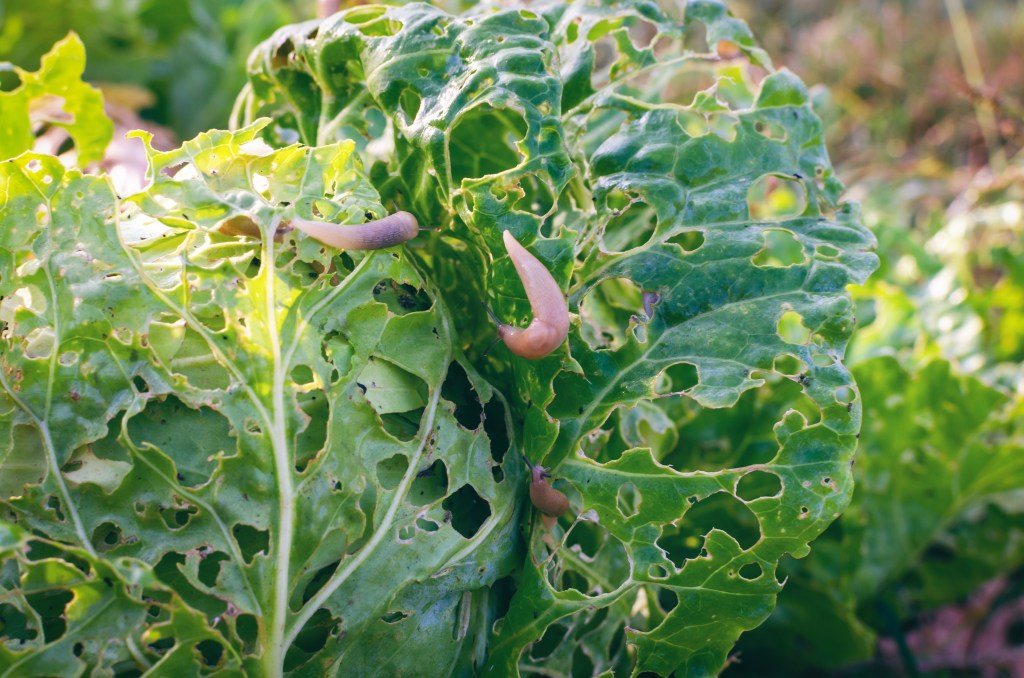


Ever heard the expression, “don’t throw the baby out with the bathwater”? It’s a saying that reminds us not to act hastily and discard something valuable along with the unwanted. (I also think it was a genuine concern back when people washed in tubs filled with water!). When you are trying to get rid of garden pests, don’t sacrifice your plants.
Now that you’ve carefully planted your seedlings, the next challenge is protecting them from pesky invaders like arthropods (beetles), gastropods (snails and slugs), or whatever is native to your locale. These creatures are drawn to our gardens for the same reason we are—nutrition. There have been mornings when a smile was turned into a frown by the sight of a cabbage carcass, ravaged overnight by snails.

There are numerous methods for managing these pests, but at ColorBlindWork, we prioritize natural and sustainable practices that safeguard both us and our environment. Harmful pesticides are out of the question. After all, who wants to risk contaminating the soil, air, or water when aiming for organic produce?
Instead, we opt for safer alternatives like diatomaceous earth and beer traps (just make sure those pests aren’t driving afterward!). It’s essential to use caution with any pest control method, considering the presence of our invaluable pollinators such as bees and butterflies.
Integrated Pest Management (IPM) principles aim to minimize the impact of pests while prioritizing the health of the environment, humans, and non-target organisms. This involves a combination of techniques, including cultural, mechanical, biological, and if necessary, chemical methods.
So, how do we tackle these garden intruders? Timing is crucial. Catch them in the act. Interrupt their meal when they’re most active, whether that’s late at night or during their feeding frenzy. Yes, it might mean a night under the stars in a tent with a sleeping bag, but it’s worth it to protect our plants.
Try diatomaceous earth, which works wonders against beetles and unwelcomed worms (like the voracious, tomato stem camouflaged horn worm in the photo). However, it might not be as effective against snails. And as for the suggestion of sticky paper traps from a farmer a few weeks ago, well, that’s a hard pass – we’d rather see mosquitoes stuck than our beloved bees and mariposas (butterflies).

It’s up to you to track, identify and eliminate the pests that harm your precious garden. In the battle against garden pests, it is important to take the time to choose the best method—the best for you, your family, your plants and your ecosystem. With a little patience, innovation, and respect for the natural world (even those pesky invaders and their kin), we can ensure a thriving garden without sacrificing our values. Let’s grow something!
Recap
- Manual Removal: Handpicking pests like beetles and snails can be an effective method, especially for smaller gardens. Regularly inspecting plants and removing pests can help prevent infestations from becoming overwhelming.
- Natural Repellents: Using substances like diatomaceous earth and beer as natural repellents is a great alternative to chemical pesticides. Diatomaceous earth works by dehydrating insects and can be effective against certain pests. Beer traps are particularly effective against slugs and snails, as they are attracted to the scent but become intoxicated and drown in the liquid.
- Timing: Your advice to intervene when pests are most active, such as at night, is spot on. Many pests, like slugs and snails, are nocturnal feeders, so addressing them during their peak activity periods can enhance the effectiveness of control methods.
- Consider the Pollinators: It’s crucial to consider the impact of pest management techniques on beneficial insects like bees and butterflies. Avoiding methods that harm these pollinators, such as sticky paper traps, demonstrates a commitment to preserving the overall health of the ecosystem.
 ColorBlindWork People | Plants | Purpose
Leave a comment