
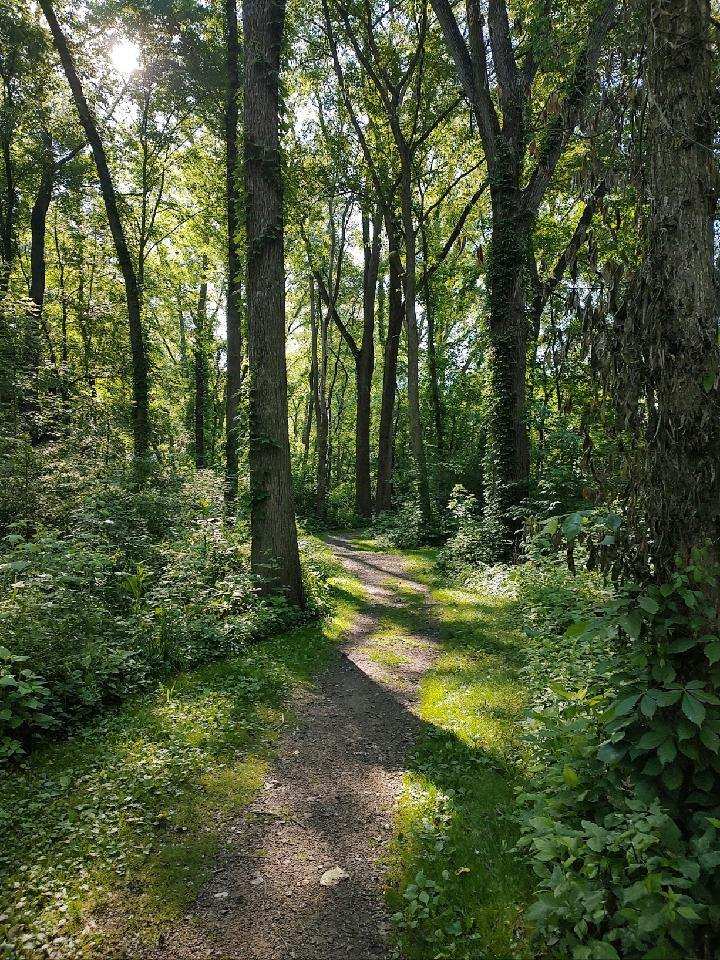


I learned a bit about forestry practices during the Ohio Certified Volunteer Naturalist training this summer. The Holden Arboretum Hidden Forest and Gardens speaker talked about how to manage forests to protect wildlife and encourage a healthy tree landscape.
Their practices include thinning, invasive removal, and edge feathering to improve forest health, wildlife habitat, and resilience to climate change and disease. These are the same practices followed by the local parks (Stark Parks, Summit Metro Parks, Cleveland Metro Parks, Portage Parks, etc.) We adopt and promote those healthy tree practices on our property, too.
This week, we cut back and cleared out some trees. The tree branches grow back every spring in time for the birds to check in so we are satisfied that we are supporting their migration and reproduction needs.
The trees are small, up to 4 inch diameter when we cut them back. We thin them primarily to prevent overcrowding, which we learned was the cause of the death of a favorite pine. Rather than discard the 15-20 feet of cuttings, we stood them back up, leaning them against the trunks or other structures. In this way, the habitat is only slightly disturbed and we achieve our purpose of thinning. The leaves and any small branches are mulched or added to piles. Very little gets wasted in our sustainable spaces.
We saved one tree cutting, which has a multi-season story to tell. How old is this tree? (answer below)
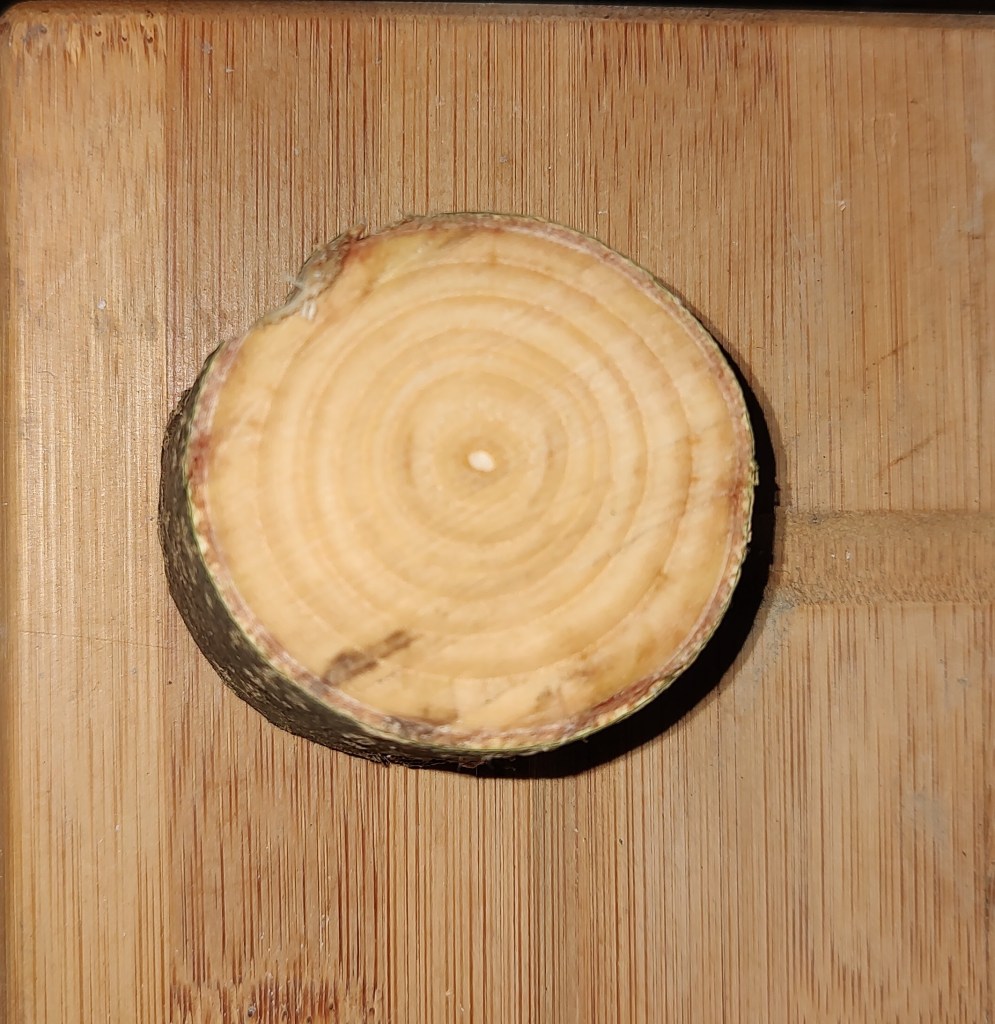
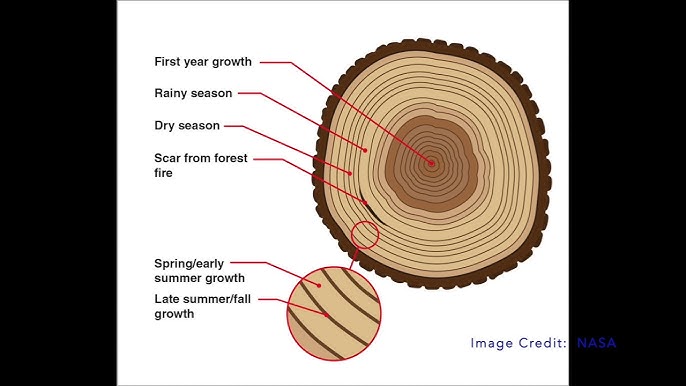
From NASA Climate: The light-colored rings represent wood that grew in the spring and early summer, while the dark rings represent wood that grew in the late summer and fall. One light ring plus one dark ring equals one year of the tree’s life.
So if you counted, there are five light and five dark rings, meaning the tree is five years old. This tree will have more years as new offshoots will form from the remaining trunk!
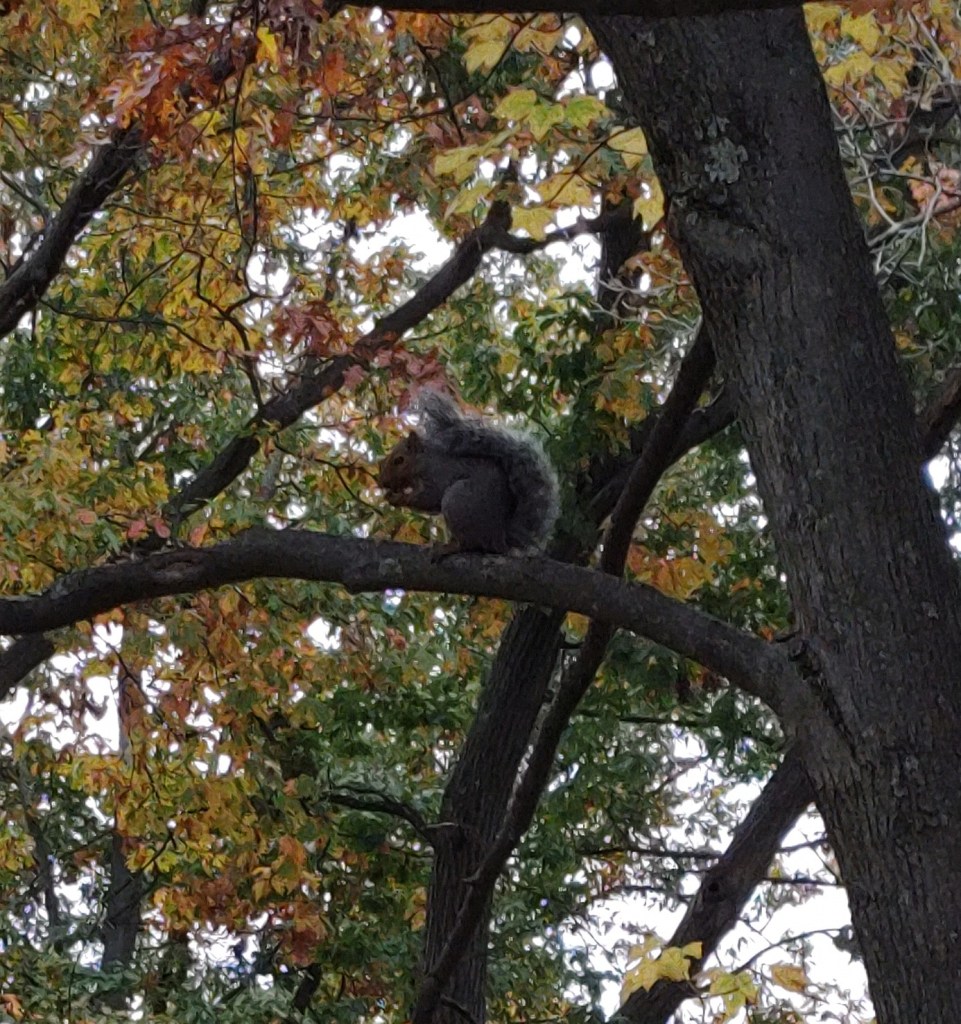
While cutting, we noticed a small maple growing along with several tulips this year. We have the squirrels to thank for burrowing acorns and other tree seeds, and the local birds for dropping berry and tree seeds to create our tiny forests. To our nature partners we say, “Let’s grow something!“
 ColorBlindWork People | Plants | Purpose
Leave a comment