


If you’ve read my posts in the past, you will have noticed that I write quite a bit about nature. Most of the photos that I post are of the natural world. It comes from a deep, albeit late, respect for the Earth and what I believe is my responsibility to leave as few traces behind.
Recently, we installed a new kitchen faucet. I write “we” but I was the one on my back under the sink. 😁 Plumbing is not a squatting or kneeling job; it has to be done looking up from inside a cabinet.
The faucet needed replacing after 15+ years. It had started to leak and waste water, which as I learned, impacts the waterways, and all the way to the ocean, that are downstream from us. No matter the attempt at tightening and cleaning (yes, we believe in using it up and wearing it out!) we couldn’t stop the leak. So, given our DIY inclinations, we bought the fixture to install it.
When we searched for the faucet online, I was looking for some type of water efficiency labeling. I recalled that we had a replaced one of our toilets with a water efficient one a few years before. It turns out that I was looking for the WaterSense label. More on WaterSense later.
I always like to have a little bit of math in my day so I asked myself (then DuckDuckGo), what is the impact of a leaky faucet? Straight from the search engines in the power-depleting data centers (sorry but the answer was at the top of the page!):
A single faucet dripping once per second can waste over 3,000 gallons annually, a significant strain on local freshwater.
Yikes! I researched a little more and read about the WaterSense program. It’s one of those topics I learned about years ago and then forgot. I suppose that once there is something good going on, I don’t give it much thought. So what is WaterSense?
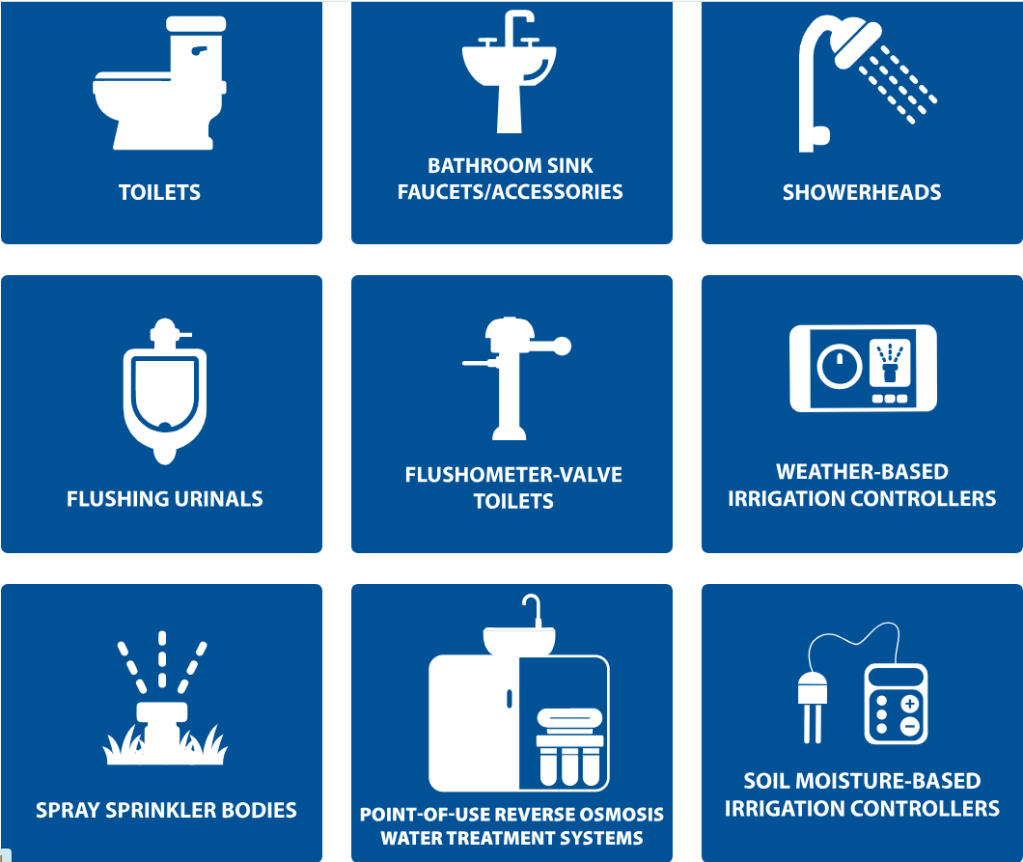
WaterSense labeled products meet EPA’s specifications for water efficiency and performance, and are backed by independent, third-party certification.
Certifying organizations help maintain the WaterSense label’s integrity and credibility by verifying and testing products for conformance to WaterSense specifications, efficiency, performance, and label use, and also conduct periodic market surveillance.
Unfortunately, the WaterSense labeling program does not seem to apply to kitchen faucets, which explains why I never found an efficiency label!
On the EPA site, I saw that through 2024, there were educational events held for an annual Fix A Leak Week (no events in 2025). These events were designed to focus on water sustainability by empowering people to fix their leaky faucets. There is also a WaterSense for Kids page to educate and develop a mind for sustainability early.
In addition to buying efficient fixtures, there are many behavioral ways to conserve water. Most of us have learned to turn off the water while brushing our teeth. We took it a step further and catch water in our sinks to use for toilet flushing. We could install a fancy system that would redirect sink water to the toilet, but that purchase is not in our budget, so we found another way to do it.
As advocates for sustainability and against climate change, we often have to make purchase decisions. When possible, we try to make the decision that will have the least negative environmental impact. Guidance like WaterSense increases the likelihood that we will make the best choices!
 ColorBlindWork People | Plants | Purpose
Leave a comment