

A proposal was submitted to SARE for the 2026 Farmer/Rancher grant program back in November 2025 and I just learned yesterday that our proposal was not selected. Nevertheless, the research will go on because the work, ColorBlindWork, is not just for our benefit.
Disappointments are never invited, but they must be expected. So though we are deflated today, we are never defeated.
The Research
In the summer of 2025, I grew tomatoes in a stacked container configuration. It was done out of convenience mostly, because I needed space and needed to make the tomatoes less accessible to birds. I decided to test this method of growing scientifically and I sought funding to do so.
See images of Groups A and B below, which represent the two configurations I used to grow cherry tomatoes in the summer/fall of 2025: A – two containers stacked and B – in a single large container. Configuration A is much like a raised bed garden except the soil depth is controlled by the size of the lower container and there is no nutrient sharing among plants, allowing for higher density planting.
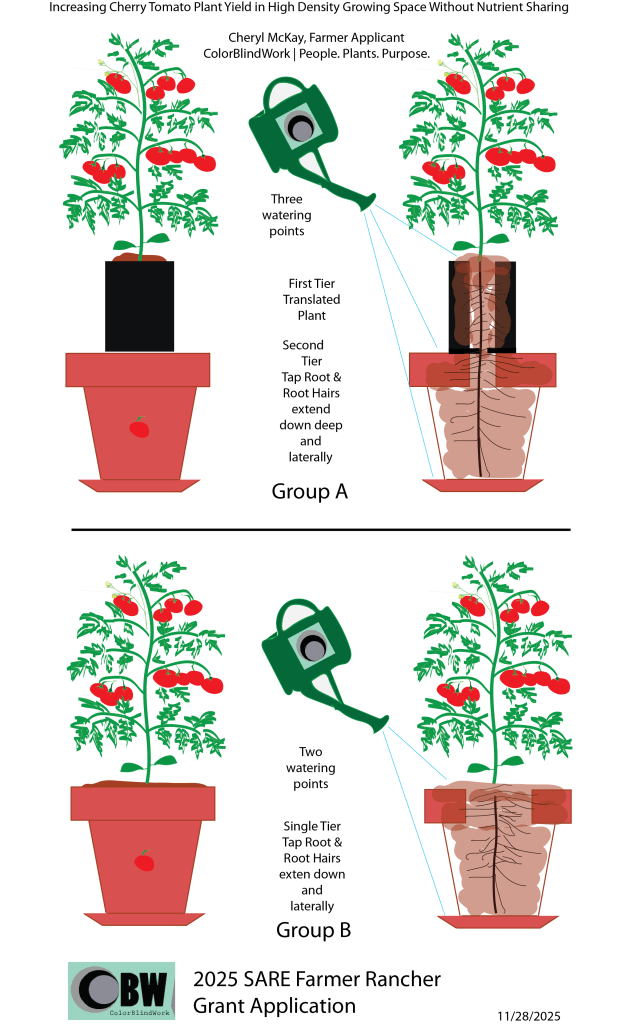
What I found was that the plant in configuration A grew a stronger and taller stem, and produced fruit longer (through November) compared to plants in Configuration B. This was likely due to the larger root system, additional application areas for nutrients, and moisture retention. Fertilizer and water was applied at three different points in configuration A vs. two points in configuration B. I applied for the SARE grant with the intention of examining what was actually happening, and to share this method with other small scale farmers.
This summer, I will perform the experiment as planned, but on a smaller scale without the financial support from SARE. In addition, I will resubmit the proposal to other organizations that reviewers with experience in and understanding of urban farming. It is not the same as field or high tunnel growing and it is for individuals who have limited space and who may not own the property where they live—which fits the profile of many communities of lower incomes and health disparities.
If anyone is interested in collaborating on this backyard/deck research, please contact me and we’ll schedule a Zoom meeting to discuss planning and publishing together. Or if just you have general questions, let me know!
 ColorBlindWork People | Plants | Purpose
Leave a comment