
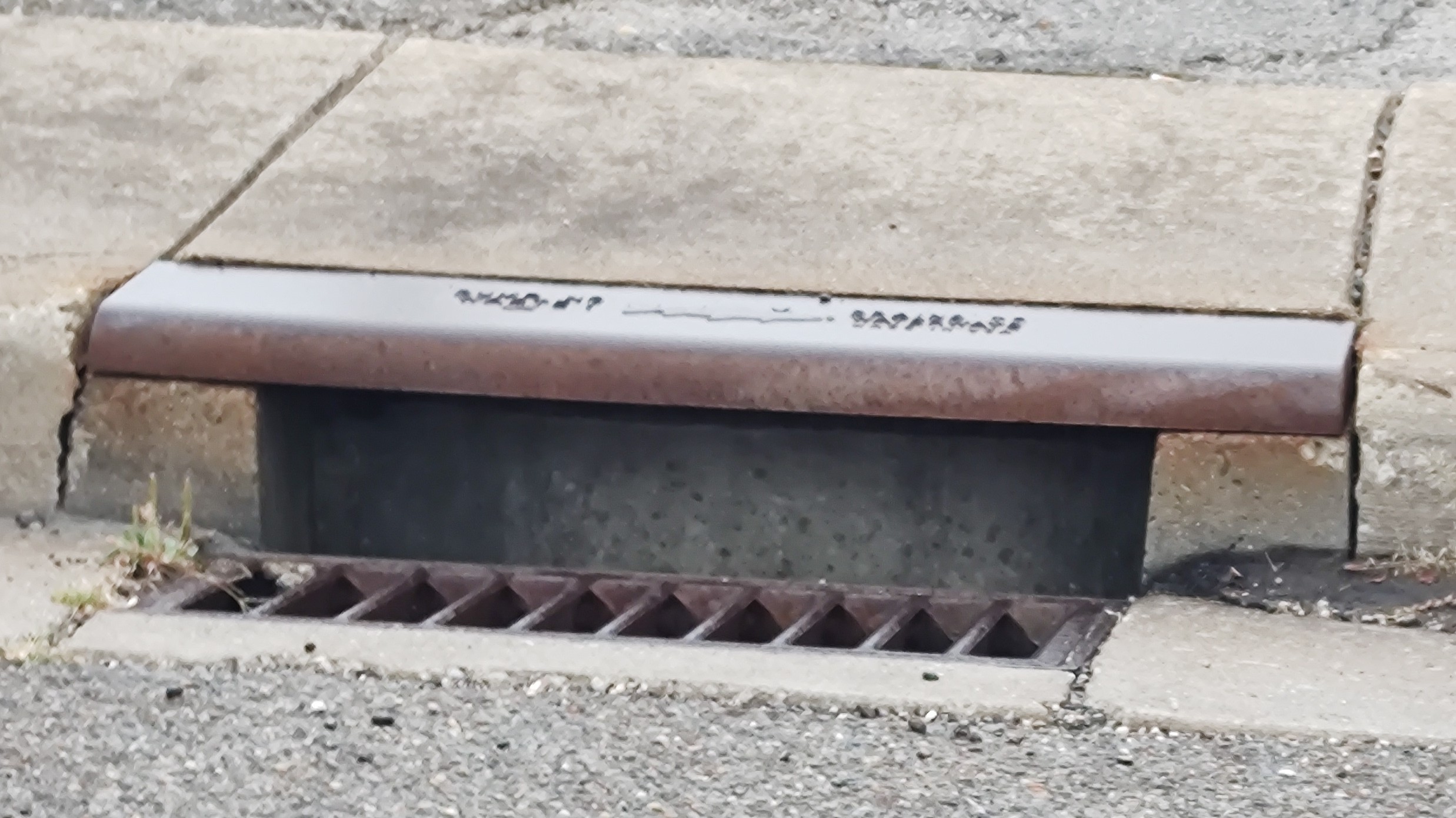


I hate to admit this but when I was younger, I threw some trash down the storm drain (yikes! 😲). No one had ever told me not to do this; however, it’s like that because I never saw any adults doing it, they probably thought I knew better. I didn’t back then, but now I do.
What actually should go into the storm drain? Just rainwater. But what’s actually going down those drains? Trash, chemicals, organic material (leaves, soil, plants, animals) and anything and everything that gets mixed into the flowing water, including the oil and other residue from motor vehicles. Those materials travel to rivers, lakes, streams and pollute and contaminate the waterways. For example, the chemicals from plastics are absorbed into the soil, plants, and wildlife—including the fish swimming in those bodies of water. We can help to prevent that contamination.


As people who strive to be good Earth stewards, we have researched and put into practice some proven ideas to reduce our contribution to storm water pollution:
- We don’t dump any chemicals, paints, trash or other materials into the storm sewer. We understand that whatever goes in affects all of us, including micro and macro invertebrates, mammals, fish and amphibians that are trying to get a life. 🐸
- We keep our trash confined to trash cans. Covered with tight lids so nothing blows out, and no animals can sort through it.
- Narc on our neighbors. Yes, we snitch. If we see someone dumping anything into the drain, we call the local Soil and Water Conservation District office to report it. Like karma, the contamination will come back to all of us.
- We have rain barrels and use the caught water to irrigate our plants. We use rain barrels, buckets, and other containers that, after rainfalls, we can pour into the outdoor gardening spaces. It prevents the water from the roof from reaching the storm drains, and it prevents us from having to use municipal water ($).
- We built rain gardens! Using plants, stones, mulch and other materials, we created buffer areas around our home. When the water runs off the roof or down the drive, it first encounters the rain garden. Most of the water will stick around to irrigate the rain garden plants and any chemicals or trash will be caught there too.
What can you do where you live? If you’re in Stark County, Ohio, check out the Stark Soil and Water Conservation District for more information!
Leave a Reply